
A friend of mine mentions that the cost of a specific cryptocurrency has doubled. You sign up for a trading account and watch a few videos, and then you feel like investing. The issue is that you don’t know the technology. It’s possible to understand the price change without fully understanding the product you’re purchasing or the technology that works or the consequences of a malfunction.
Before spending real money, cryptocurrency education must close the gap. The Coin Course provides educational resources covering blockchain basics and crypto wallets. It also provides information on decentralized finance, non-centralized financial technology and security, trading as well as other topics. For the beginner, these subjects are most useful when learned in a concrete order.
Begin with the transaction and not the price chart.
A great tutorial on cryptography must clarify the purpose of cryptocurrency. Bitcoin is one example. It allows value to move through its network without the need for a traditional bank to maintain the transaction ledger. Ethereum allows digital assets to be used and applications that utilize programmable smart contracts.
Neither technology becomes easier to comprehend if you watch its market value. Begin by learning the functions of wallet addresses and the reasons why network verification is necessary for transactions, and what distinguishes cryptocurrency from bank money. These basic concepts help explain the opportunities and limitations of digital assets.
Track One Transactions using the Blockchain
When the technical terms are connected with everyday activities, they become easier to comprehend. Imagine transferring money from your wallet to someone else. Your wallet generates a new transaction that is then approved by your private key. The transaction is then sent to the network, and then checked against the standards. It’s then included in the Blockchain.
A tutorial on blockchain that utilizes an explorer for blocks to illustrate the process is a great way to illustrate it. Users can check the transaction’s details and confirmation status.
The exercise also teaches an important security lesson Blockchain transactions can’t generally be cancelled simply because the sender entered an incorrect address. Understanding wallet mechanics can simplify its use.
Learn to safeguard your assets before exploring DeFi
Beginners are more focused on earning money, however they do not pay attention to basic security for their wallets. The private key you use to access your wallet is what controls access to your cryptocurrency. A recovery phrase permits users to re-open a suitable wallet, and perhaps access its assets.
You can share this message with someone else, and it could put your assets in danger. Useful blockchain guides should explain the differences between custodial exchanges, software wallets, and hardware wallets.
They should also be aware of frauds involving phishing, a suspicious connections to wallets, and the risks of granting smart contracts’ permissions without understanding them. These lessons become especially important in the context of decentralized finance, where the users are able to interact directly with apps rather than relying entirely on traditional intermediaries.
Understanding Crypto Trading without confusion Activity that is advancing
People who wish to learn cryptocurrency trading usually start with candlestick patterns and technical indicators. These tools aren’t without merit, but they shouldn’t replace the need to understand the risk. Consider how much money you’re willing to lose before you make a trade. Also, think about what could invalidate your idea and how the costs of transactions will affect your results.
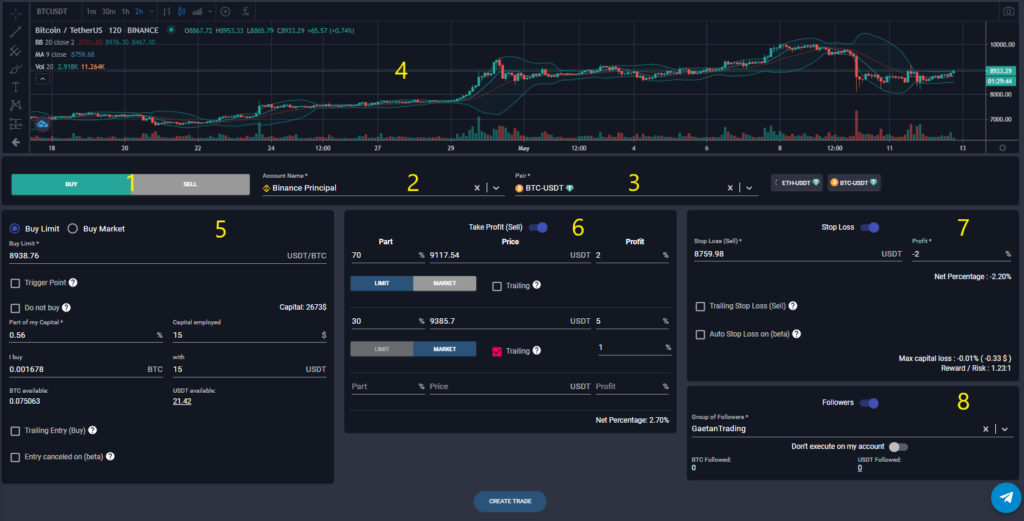
Limit orders allow you to specify the price but execution isn’t always guaranteeable. A market order gives priority to immediate execution. The leverage increases the risk since even small price fluctuations can result in massive losses.
For beginners, it is possible to get some experience by studying the market and making hypothetical trades, before they commit real funds. The trading journal will reveal the extent to which decisions are made on a logical plan or simply based on emotions.
Improve Your Questions to Learn about Advanced Topics
As soon as the fundamentals are understood, the subject such as DeFi and NFTs are easier to evaluate. Instead of focusing on what a DeFi platform will pay consider where the income is derived and the risks the users are willing to take.
When researching NFTs distinguish between ownership of a token and ownership of the artwork or intellectual rights that are underlying.
Understanding the benefits of staking can help you decide whether they are a compensation for those who help secure a system or if the rewards stem from the arrangement of another financial arrangement. The Coin Course brings these topics into a broader cryptocurrency learning experience, helping readers develop knowledge across different areas of the industry.
Create knowledge that outlasts market trends
The price of cryptocurrency is constantly changing, however a basic understanding is still helpful. Understanding blockchain transactions and the security of your wallet, trading mechanics and applications that are decentralized can help to evaluate new initiatives without relying solely on marketing claims.
It’s not necessary to master everything at once. You can begin with one concept and then move on to different subjects after you have mastered the basics. There’s no need to be an expert overnight. It’s to gain enough knowledge to be able to spot risks, ask better questions, and make informed choices as the cryptocurrency market changes.